
In this feature article we’re going to look at thorns: their religious interpretation; their dangers; their use; their place in nature; and their biology. I should warn you; thorns are a ‘thorny’ subject!
If you’ve been outdoors recently – trimming Rose bushes, or walking too close to a Blackthorn bush – you may have been scratched or pierced by a thorn. If so, you are likely to have cursed, explicitly or to yourself.
Cursed views about thorns are rooted in Christianity, where they were seen as a physical sign of The Fall. For his sins, Adam is told: “cursed is the ground because of you …. thorns and thistles it shall bring forth for you” (Genesis 3: 17-18). The crown of thorns placed on Jesus’s head at his crucifixion was explicit mockery, but Christians – heeding the words from Genesis – have viewed it as symbolic of the human sins for which he died. Thorns said to be relics from Christ’s crown – such as the one recently returned to Notre Dame – are venerated (though John Calvin deferred on this). Whether cursed or venerated, our view of thorns has a long and mixed history.
If other animals can be said to have ‘views’ on thorns, these will also be mixed. Many larger mammals will stay well clear of thorny plants and trees. Indeed, several plants and trees have evolved thorns as a protective device against browsers. Humans have long planted thorny hedges around their fields and property, to keep out herbivores, predators and even burglars. By contrast, many smaller animals, including birds, use thorny bushes as a haven. In the African-American folktale, Brer Rabbit fooled the Fox into throwing him into the briar patch, where he knew he would be safe and from where he could easily escape. In America, the Cactus Wren lives and feeds deep within cacti, like Cholla, that could severely damage any reptile or mammal, including us. Closer to home, Blackbirds and Thrushes seem quite happy to forage amongst Pyracantha or Hawthorn.
Let us turn to the biology of thorns. If you are pricked by a Hawthorn or Rose bush, the pain may feel the same, but the biology of the two differs. Strictly speaking, Roses have ‘prickles’ that are sharp extrusions from the outer layer of the plant’s stem, and occur in a random fashion. ‘Thorns’ are modified branches or stems and they occur in a more particular and systematic manner. To complicate matters, if you have been scratched by Holly or Mahonia, this will be caused by ‘spines’ on the leaves of the tree, something different from thorns.
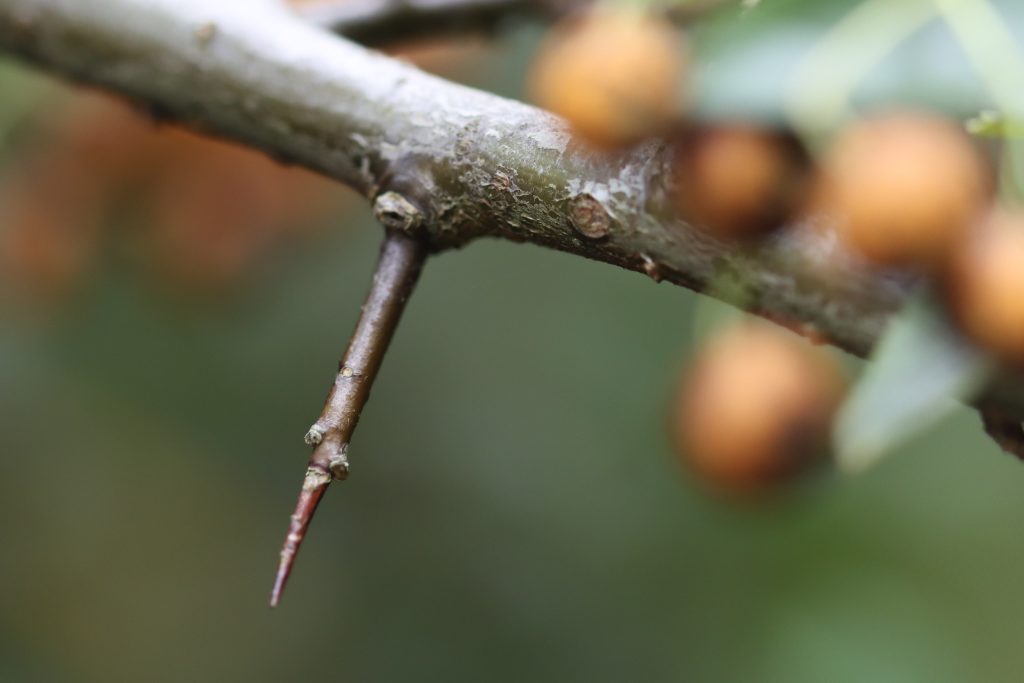
THORN: Pyracantha 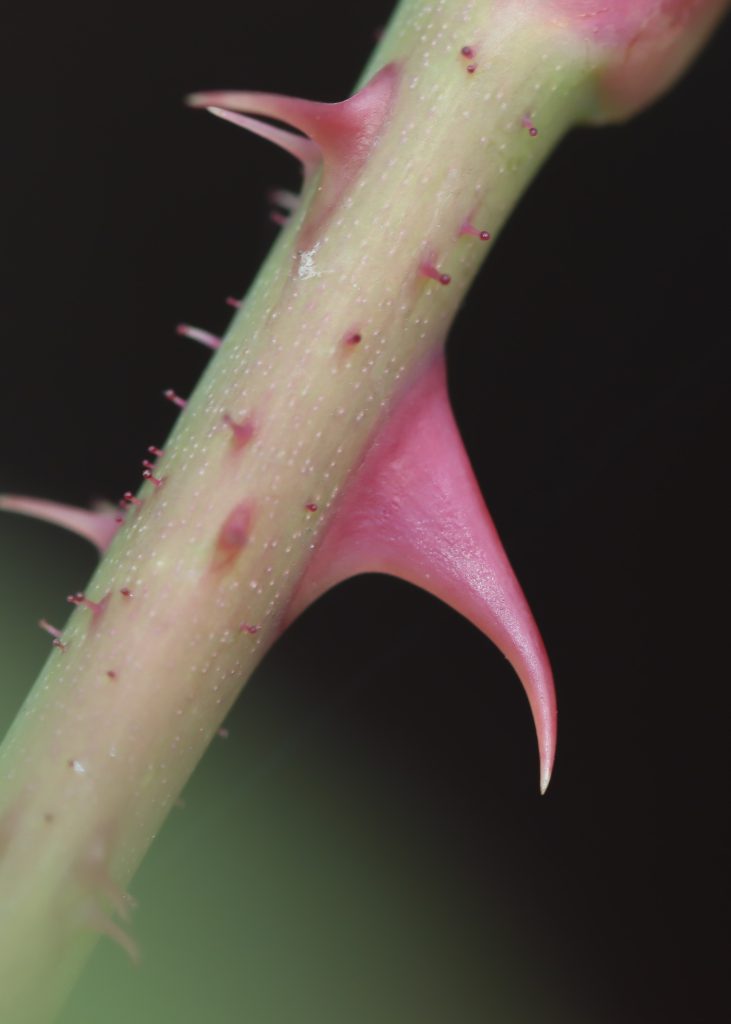
PRICKLE: Rose 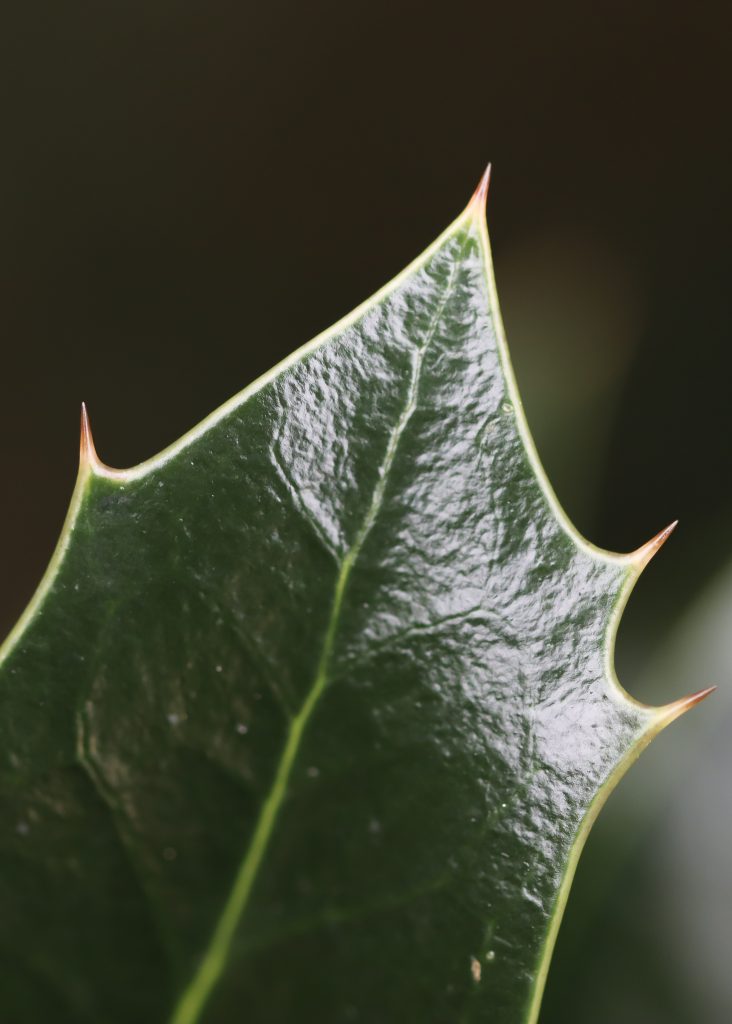
SPINES: Holly
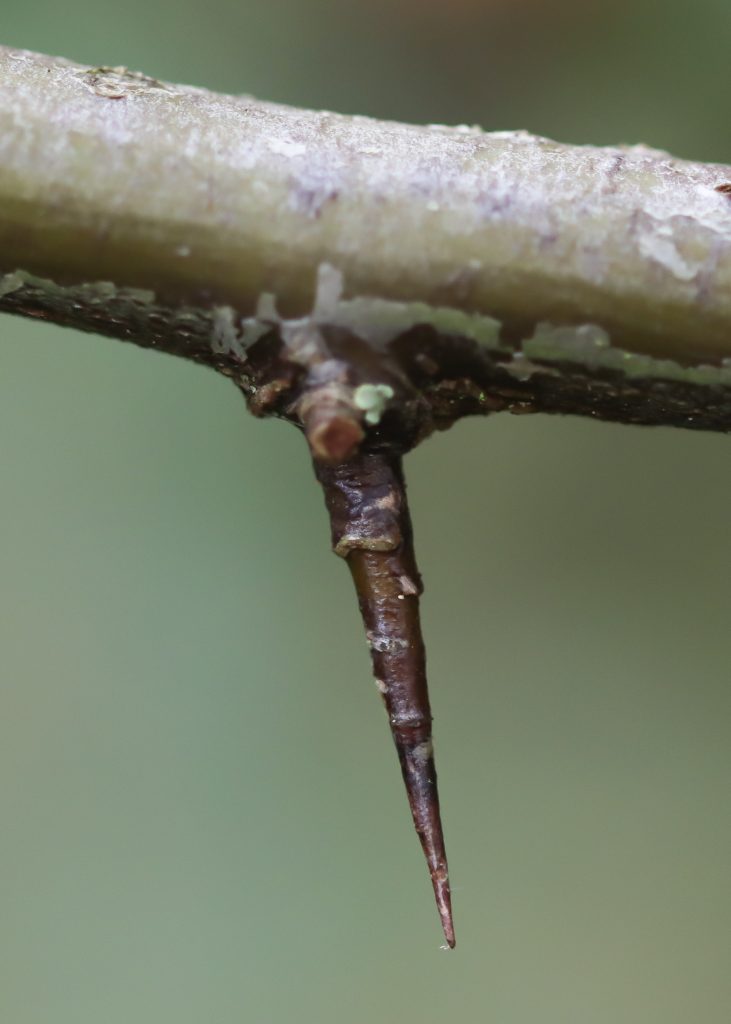
If you’ve got the patience to go even further with this biology, we can identify differences between the thorns of Hawthorn and Blackthorn. The thorns of the Blackthorn (see left hand image below) are usually more than 2cm long, held more-or-less at right angles to the main branch, and often have buds along their length. These thorns prove the most hazardous and painful for gardeners! The thorns of the Hawthorn (see right-hand image below) are usually shorter. They start to emerge from the same point on the branch as buds, begin to grow leaves, but then develop a hard pointed thorn at the end (which, itself, does not have buds or leaves along its length).
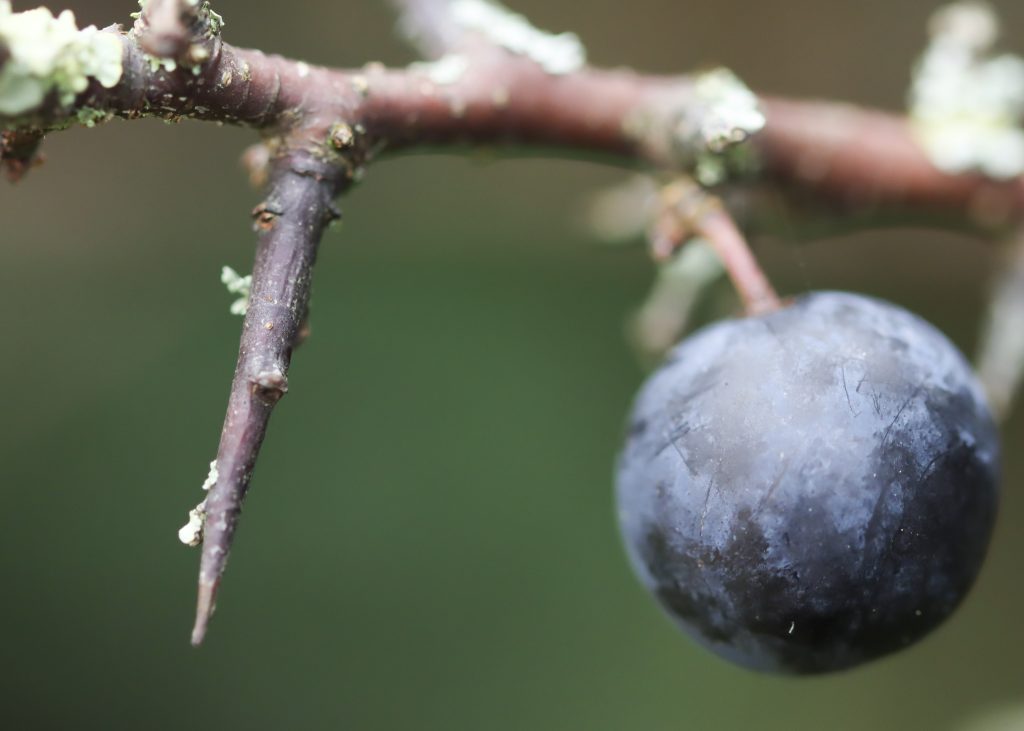
Thorn on Blackthorn 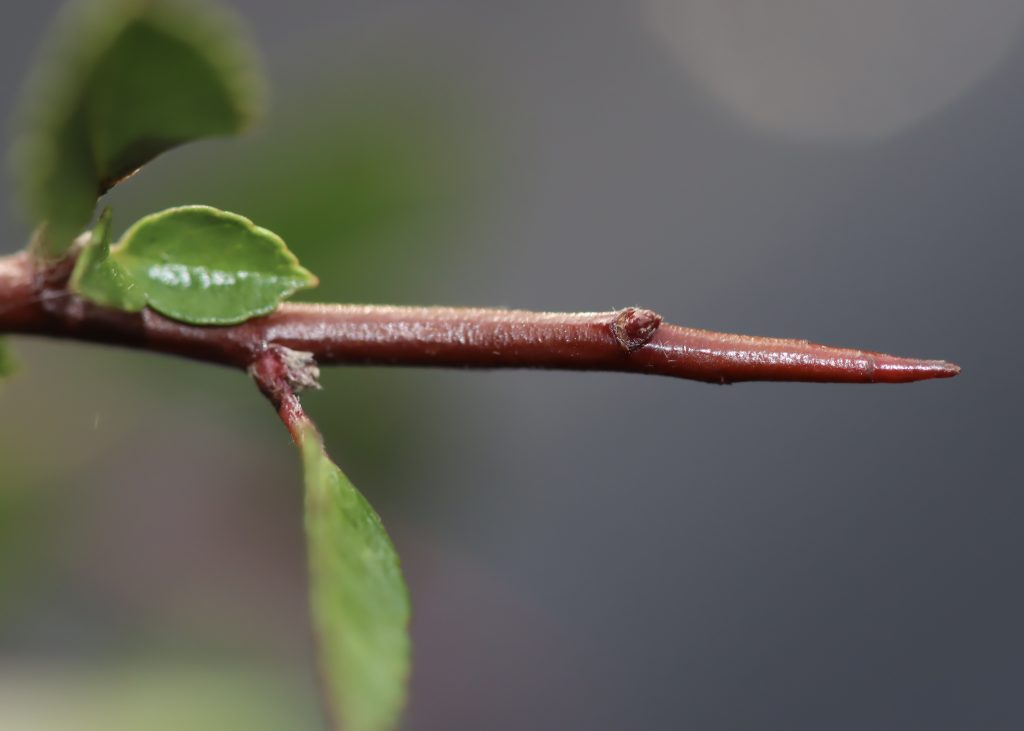
Thorn on Hawthorn
Now you can look at thorns in a different way. But best not get too close.
All photographs taken in Bredfield by the author.